You Can Take the Girl Out of the Hometown, But You Cannot Take the Hometown Out of Her Wardrobe
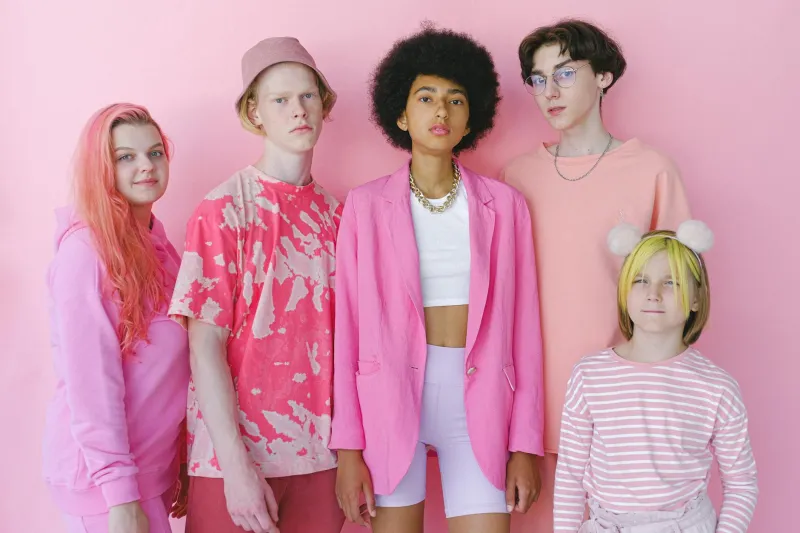
You Can Take the Girl Out of the Hometown, But You Cannot Take the Hometown Out of Her Wardrobe
There's a moment that happens to most people who relocate — from a small town to a city, from one coast to another, from the Midwest to anywhere with a fashion week — where they look down at what they're wearing and realize: oh. This is where I'm from.
Maybe it's the sneakers. Maybe it's the way you still default to a fleece pullover when the temperature drops below 60. Maybe it's the fact that you own three pairs of cowboy boots despite not having touched a horse since a birthday party in 2003. Whatever it is, it's there. Regional style leaves a mark that no amount of Pinterest boards or SoHo window-shopping fully erases.
This is not a complaint. It's more of an observation — warm, knowing, and just slightly forensic — about the way the zip code you grew up in quietly becomes the factory setting of your personal aesthetic.
The Suburban Midwest Uniform and Why It Never Fully Leaves
If you grew up in the suburbs of Ohio, Illinois, Indiana, or any of the other states that exist in the comfortable middle of the country, you were raised on a specific style religion. Its tenets: Levi's that fit fine, a pullover from a university you may or may not have attended, a North Face jacket that has survived approximately eleven years of actual weather, and clean white sneakers that represent your one concession to trend participation.
The Midwest suburban uniform is not about fashion. It is about function with dignity. You looked presentable. You were warm. Nobody was trying to make a statement, because making a statement in the suburbs of Columbus requires a certain amount of emotional stamina that most people were saving for other things.
Now you live somewhere with a fashion scene and you have acquired blazers and interesting boots and a tote bag from a bookstore that closed in 2021. But when you need to get something done — a Saturday errand run, a long drive, a day where the stakes are low — the Midwest uniform reappears like muscle memory. The North Face knows the way home.
The California Casual Industrial Complex
Growing up in coastal California installs a very specific operating system. The core belief: clothing should look good without appearing to have been chosen. The ideal is always 'just came from the beach, heading somewhere interesting.' This applies even in January. This applies even if you are nowhere near a beach and heading to a Trader Joe's.
The California-raised person has a relationship with denim that borders on spiritual. They own multiple variations of a white linen shirt. They are comfortable in sandals at occasions where sandals are technically questionable. They have never fully understood why anyone would wear a suit unless legally compelled to.
Move them to New York or Chicago and watch them spend two winters in denial before finally buying a real coat — not a California 'coat,' which is a denim jacket with a hoodie underneath, but an actual structured wool situation that acknowledges the existence of temperatures below 40 degrees. The California style DNA, however, persists. The linen shirts survive. The sandals make a defiant appearance every April.
Rural Texas and the Outfit That Means Business
There is a specific kind of confidence that comes from growing up somewhere that has a genuine dress code for ranch work, church, and Friday night football, and those are three completely different uniforms with zero overlap. Rural Texas teaches you, early, that clothing is purposeful. You dress for the thing you are doing, and you do it correctly.
This translates into adulthood as an almost aggressive clarity about occasion dressing. The person who grew up in rural Texas does not show up underdressed to a wedding. They do not wear pajama pants to the airport. They have strong feelings about the appropriate footwear for a given situation, and those feelings were formed on a ranch or a church pew or a Friday night bleacher seat before they turned twelve.
Migrate them to Austin or Dallas and the aesthetic evolves — there are vintage Wranglers now, and interesting belt buckles, and a very specific kind of Western-influenced style that's been workshopped into something genuinely cool. But the underlying architecture is still there: clothes have a job to do, and you should let them do it.
Growing Up in New York and the Permanent All-Black Setting
If you were raised in New York City — not upstate, not suburban New York, but the city — something happened to your relationship with color that cannot be undone. You defaulted to black. Not as a fashion choice, exactly, but as a kind of protective coloration. Black is practical on the subway. Black doesn't show the city on it. Black goes with everything and requires zero decisions at 7am.
The New York-raised person moves somewhere with actual color in the culture — Nashville, say, or Miami — and spends several months squinting at the brightness before cautiously introducing a navy blue. A forest green, maybe. Something that is technically a color but still operates close to the neutral end of the spectrum.
Full color adoption may never happen. The black coat is non-negotiable. The black boots are eternal. There will always be at least one all-black outfit in rotation, because some lessons go too deep to unlearn.
The Style You Can't Outgrow
Here's the part where this stops being a joke and becomes something slightly more honest: the reason your hometown style sticks around isn't weakness or lack of imagination. It's because clothing is memory. The way you dress is tied to the places you felt comfortable, the people you were surrounded by, the visual language of wherever you came from.
You can absolutely evolve. People do it all the time — they move, they absorb new influences, they discover entire aesthetic worlds that didn't exist in their hometown zip code. Growth is real and wardrobes can genuinely transform.
But underneath the new stuff, the hometown layer persists. It shows up when you're tired, when you're comfortable, when you're not performing for anyone. It shows up when you reach for the fleece or the boots or the all-black or the linen shirt without thinking, because that's the outfit your nervous system already knows.
Your style origin story is still in there, running quietly in the background. And honestly? It's kind of the most authentic thing you own.