Spending $900 on a Beige Sweater Is Apparently a Personality Now
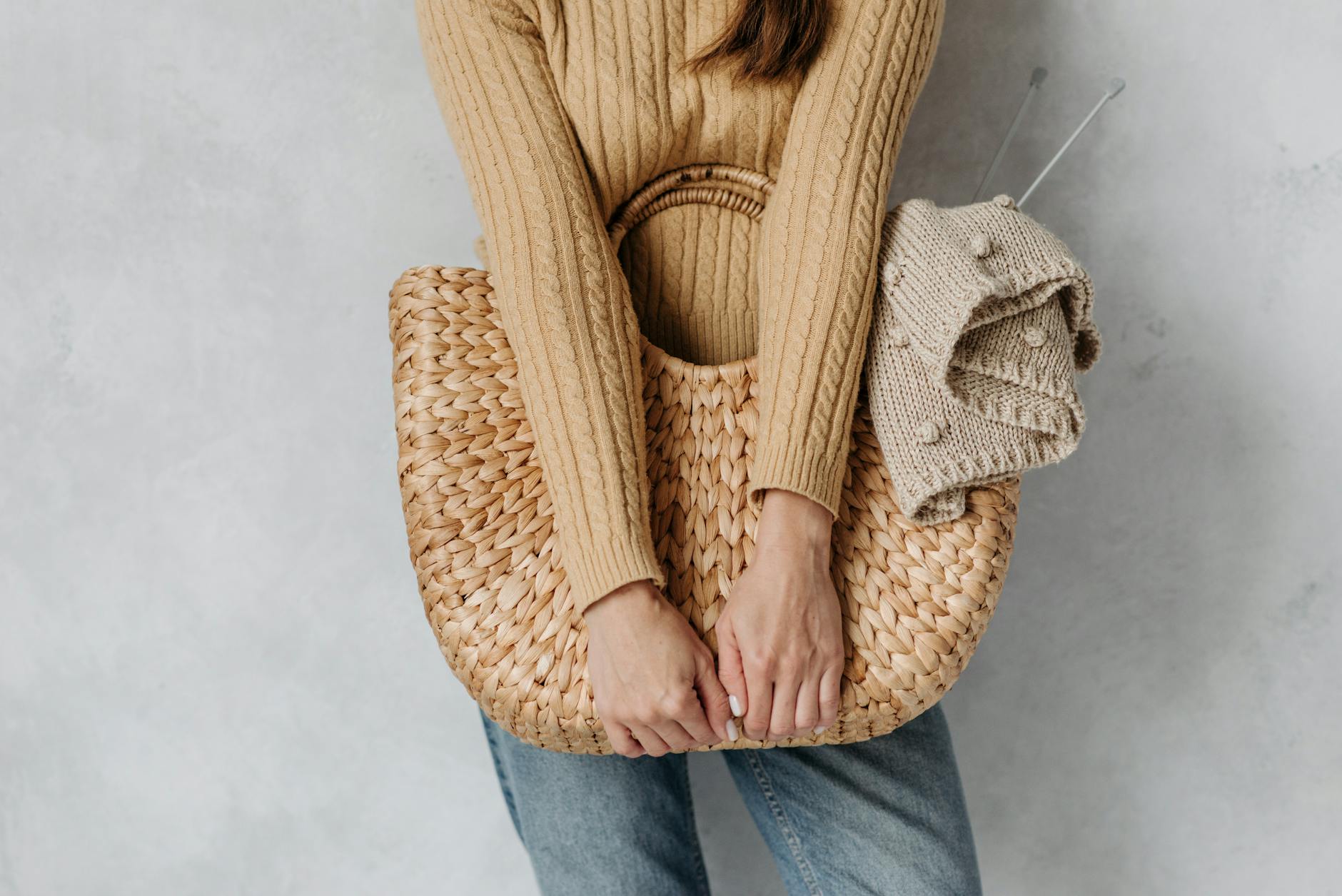
Spending $900 on a Beige Sweater Is Apparently a Personality Now
Let's get one thing straight. The most expensive outfit in the room is often the one that looks like it came from a CVS clearance bin. No logo. No sequins. No visible proof that anything unusual is happening financially. Just a perfectly draped camel coat, some tasteful trousers, and the quiet confidence of someone who has never once stress-eaten cereal for dinner.
Welcome to quiet luxury — the trend that convinced an entire generation of Americans that the pinnacle of style is looking like you tried absolutely zero effort, while spending the GDP of a small island nation on your closet.
What Even Is Quiet Luxury?
At its core, quiet luxury is stealth wealth dressing. It's the aesthetic language of old money, European minimalism, and people who refer to their vacation homes as "the house in Maine" without a hint of irony. Think The Row, Loro Piana, Brunello Cucinelli. Think Gwyneth Paltrow on a Tuesday. Think every character in Succession who looked expensive while actively destroying lives in muted tones.
The rules are deceptively simple: neutral colors only, exceptional fabric quality, zero visible branding, and cuts so clean they could file your taxes. The message being communicated — without technically communicating anything — is that you are so wealthy, so secure, so completely unbothered by the concept of impressing anyone, that you can afford to dress like a very sophisticated blank wall.
It is, in the most delightful way possible, the fashion equivalent of saying "I don't need to prove anything" while absolutely proving something.
How TikTok Turned a Rich-Person Habit Into Everyone's Problem
Here's where it gets genuinely fascinating. Quiet luxury has always existed. The truly wealthy have been dressing this way for decades, specifically because obvious logos and flashy design were considered gauche — a signal that your money was new, loud, and slightly embarrassing. Old money didn't wear the label on the outside. Old money was the label.
Then TikTok got hold of it.
Suddenly, the aesthetic that was built on invisibility became extremely, aggressively visible. "Quiet luxury" outfit videos racked up millions of views. Influencers in $1,200 cashmere turtlenecks explained, at length, how they weren't trying to impress anyone. The algorithm served it to 22-year-olds in Columbus, Ohio, who immediately started hunting for affordable dupes of things that were specifically designed to not be noticed.
The irony is so thick you could knit it into a merino crewneck and sell it for $600.
The Psychology of Dressing Like You Don't Care (When You Absolutely Do)
So why did this land so hard with American audiences specifically? A few theories.
First, there's the exhaustion factor. After years of maximalism — the Balenciaga logomania era, the "more is more" influencer aesthetic, the era of wearing a full outfit that could be spotted from a passing helicopter — something quieter felt genuinely refreshing. Dressing down became a form of dressing up.
Second, and perhaps more interestingly, quiet luxury flatters a very particular American fantasy. The fantasy of effortlessness. Americans are obsessed with the idea of people who don't seem to be trying — in their careers, their relationships, their bodies, and yes, their clothes. The person who just naturally looks like that, who rolled out of bed into a perfectly proportioned linen blazer, represents a kind of aspirational ease that feels almost spiritual.
Third: Succession. Let's not underestimate Succession. Costume designer Michelle Matland dressed those characters in a masterclass of restrained wealth, and viewers noticed. Roy family core became a legitimate mood board.
The $900 Sweater Problem
Here's the part where we have to be honest with each other. Quiet luxury, as an aesthetic ideal, is genuinely lovely. Clean lines, quality fabrics, a color palette that goes with everything — there's real wisdom in that approach to dressing.
But the price points are completely unhinged for most people.
A Loro Piana cashmere sweater will run you upward of $1,500. A basic Totême trench coat sits around $900. The Row's simplest tote bag? We're talking four figures, minimum. These are not aspirational purchases in the "save up for it" sense. These are aspirational in the "contemplate your life choices" sense.
And yet the trend thrives, because the genius of quiet luxury is that it's highly dupeable at the visual level. A well-cut $80 camel blazer from a fast fashion retailer can photograph almost identically to its $2,000 counterpart. The aesthetic is democratically mimicable in a way that a Versace print simply is not. You can participate in the language of quiet luxury without actually speaking it fluently, and most people will never know the difference.
Which, when you think about it, is the most quietly luxurious thing of all.
What It Actually Says About Us
There's something genuinely revealing about the fact that America — a country that invented the billboard, the neon sign, and the reality television show — became collectively obsessed with the art of not showing off.
Quiet luxury isn't really about clothes. It's about a fantasy of security. The kind of security where you don't need external validation, don't need the logo to announce your value, don't need anyone to clock your outfit from across the room. It's dressing as emotional regulation, which is either very evolved or extremely telling, depending on how charitable you're feeling.
We looked at a beige cashmere sweater and saw freedom. We saw a person who had nothing to prove. We saw, maybe, a version of ourselves that had finally, fully arrived.
And then we bought the dupe, staged it against a white wall, and posted it with the caption "not trying lately."
Same, honestly. Same.