The Thrift Store Glow-Up That Ruined Thrift Stores: A Complicated Love Story
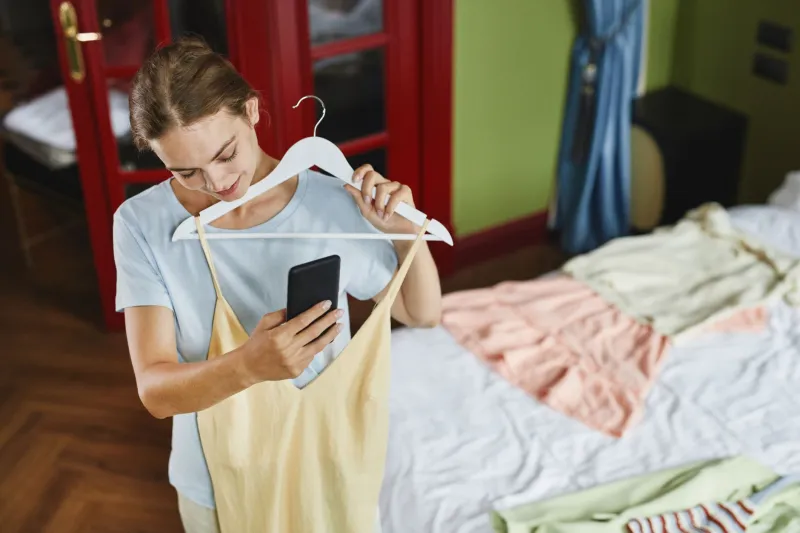
Let's set the scene. It's a Saturday morning at a Goodwill in a mid-size American city. The fluorescent lights are doing what fluorescent lights do. Someone's donated a truly baffling quantity of VHS tapes. And there, in the blazer section, a person in coordinated earth tones is filming themselves flipping through the rack in a way that is clearly not their first take. The caption will read something like thrift haul 🌿 slow fashion era ✨ found this vintage gem for $6 !!!
Except the blazer that was $6 last year is $18 now. And there are three other people filming in the same aisle.
This is the story of how thrift stores became the most complicated retail experience in America — part sustainability movement, part content category, part status symbol, and increasingly, part of the problem they were supposed to solve.
From Necessity to Narrative
Secondhand shopping has existed in America for as long as Americans have needed clothes they couldn't always afford to buy new. Thrift stores, Goodwill, Salvation Army, church rummage sales — these were practical resources. You went because your budget required it, or because you were hunting for something specific, or because you genuinely liked the treasure-hunt randomness of it. The transaction was simple and the prices reflected that simplicity.
The cultural pivot happened gradually and then all at once. Vintage fashion had always had its devotees — the people who knew their way around a flea market and could spot a genuine 1970s Levi's jacket from across a room. But the mainstreaming of thrift culture as an aesthetic is a more recent phenomenon, turbocharged by Instagram around 2015 and then absolutely launched into the stratosphere by TikTok.
The 'thrift haul' video became one of the platform's most reliably engaging formats: the before (a pile of raw secondhand finds), the reveal (styled outfits, usually on a very photogenic person in good lighting), the price breakdown (always the price breakdown, delivered with the energy of someone announcing they've discovered a loophole in the tax code). The message was intoxicating: you could dress like an interesting, fashion-forward person and spend almost nothing and feel good about it environmentally. It was the holy trinity of modern consumption guilt management.
And then, as always happens when something genuinely good gets a lot of attention, things got complicated.
The Price Problem Nobody Wants to Fully Admit
Here is a fact that thrift store enthusiasts discuss in hushed, slightly guilty tones: prices at secondhand stores have gone up. Noticeably. In some places, dramatically.
This isn't entirely a TikTok problem — inflation touches everything, including donated goods — but the correlation between thrifting going viral and thrift store prices rising is hard to ignore. Goodwill, which sets prices regionally, has faced consistent criticism for pricing items at levels that make the 'affordable secondhand shopping' premise increasingly theoretical. A quick scroll through any thrift-focused Reddit community will surface threads titled things like 'Is it just me or is Goodwill getting ridiculous?' with hundreds of responses confirming: no, it's not just you.
The mechanics are fairly straightforward. When thrift stores started appearing in viral content as treasure troves of incredible finds at rock-bottom prices, two things happened. First, more people started shopping there — including people for whom budget was not the primary motivation, which changed the demand dynamics. Second, the stores themselves noticed that certain categories (vintage denim, anything that could be described as 'Y2K,' band tees, anything with a recognizable brand name) were moving fast and generating enthusiasm. Prices on those categories adjusted accordingly.
The result is a store where a worn flannel shirt from an unknown brand costs $8, but a worn flannel shirt with a visible Ralph Lauren logo costs $22 — because someone on TikTok said Ralph Lauren flannels are a 'find.' The thrift store has, in certain sections, started to function like a market that reads the same content its customers do.
The Hierarchy Nobody Talks About Out Loud
Thrift culture has developed a social architecture that is rarely acknowledged directly but is immediately recognizable to anyone who spends time in it.
At the top of the hierarchy: the 'real' thrifters. These are the people who have been doing this for years, before it was content, who have opinions about which specific locations in their city are worth visiting and which days the new stock comes out. They are frequently annoyed by the current state of things and will tell you so if you ask. They are not wrong.
Below that: the sustainability-motivated thrifters. These are people who genuinely believe in the environmental argument for secondhand shopping — and they're right to, the fashion industry's waste problem is real — but who have also absorbed enough thrift-as-aesthetic content that their hauls look suspiciously curated. They are not being cynical. The content just works on everyone.
Then: the content thrifters. This category does not go to Goodwill to shop. They go to Goodwill to film going to Goodwill, which is a subtly but importantly different activity. The shopping is secondary to the narrative. The 'find' is valuable primarily because it photographs well and supports a story about their relationship with consumption. Some of them will buy things they don't need or want because the item is good content. Some of them will pass on things they actually like because it doesn't fit the aesthetic of the video.
And finally: the people who were just trying to buy an affordable winter coat, who now find themselves in a Goodwill that has a line on weekends and a blazer section that costs more than they budgeted for.
The Reseller Wrinkle
Complicating all of this is the resale economy, which has grown into a legitimate industry with apps (Depop, Poshmark, ThredUp), business models, and a class of people who treat thrift stores as wholesale suppliers for their online storefronts.
This is legal, obviously, and entrepreneurially logical. But it creates a situation where the people most motivated to get to the thrift store early, most knowledgeable about which items have resale value, and most likely to buy in volume are not shopping for personal use — they're shopping for margin. The vintage Levi's jacket that would have sat on the rack until someone who needed a jacket found it now gets pulled within hours of hitting the floor, cleaned up, photographed on a white background, and listed at three to five times the thrift store price on a platform where it will be described as 'rare' and 'curated.'
Again: not illegal. But it does mean that the thrift store, which was supposed to be a leveling mechanism — good stuff at low prices, available to anyone who walked in — has in some categories become a first stop in a supply chain. The leveling mechanism has its own middlemen now.
What's Actually Left to Love
Here's the thing, though: thrift stores are still worth going to. The treasure hunt is still real. The finds still happen. The environmental case for secondhand shopping is still genuinely sound — buying used is better than buying new, full stop, regardless of whether you film it.
But the mythology that built up around thrift culture in the TikTok era — the idea that it's a pure, accessible, counter-cultural alternative to regular retail — has worn thin in places. It's become its own aesthetic, its own status signal, its own content category with its own influencers and its own premium tier.
Which means, in a very fashion way, it's become the thing it was supposed to be the alternative to.
The fluorescent lights are still doing what they do. The VHS tapes are still baffling. And somewhere in the blazer section, someone is lining up their second take, trying to get the lighting right on a $34 blazer that used to cost four dollars, captioning it the algorithm led me here and honestly? grateful.