One Cardigan, Forty Moods: The Knitwear That Knows Too Much About You
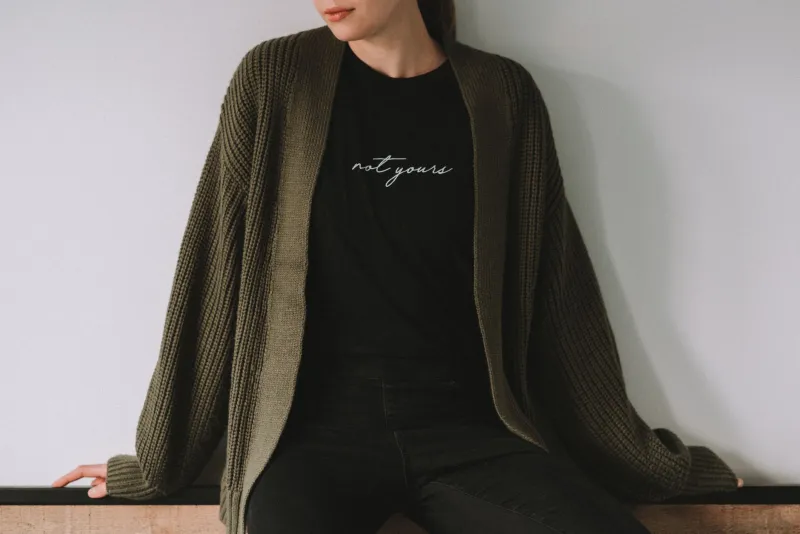
The cardigan is not just a sweater. It is a psychological document, a mood stabilizer, and the single garment most likely to have witnessed your lowest and your finest moments with equal, silent judgment. America has a complicated relationship with this particular piece of knitwear, and it is time we talked about it.
Every household in this country contains at least one cardigan that has absorbed more emotional events than a licensed therapist. You know the one. It has been present at job interviews, breakups, Sunday farmers markets, three separate instances of crying while watching a nature documentary, and at least one Thanksgiving where things got a little tense around the sweet potato situation. It has never once complained. It just hangs there, slightly stretched at the left pocket from where you kept putting your phone, waiting for the next crisis.
The Cardigan as Personality Infrastructure
What separates the cardigan from other layering pieces is that it does not merely cover your body. It communicates a very specific energy: I have things relatively under control, but I am not going to be weird about it. The fleece says you have given up. The blazer says you are trying. The cardigan says you are somewhere in the middle, which is, statistically speaking, where most of us actually live.
This is why certain people have not just adopted the cardigan but built an entire identity architecture around it. You have met these people. They have opinions about button plackets. They own at least one in a color described on the website as 'oat' or 'pebble' or something else that sounds like it was named during a very calm walk. They reach for a cardigan the way other people reach for a coping mechanism, which, to be fair, is functionally the same thing.
The cardigan person is not trying to be a fashion person. That is the whole point. They are trying to be a thoughtful person, a person who reads physical books and brings their own bag to the grocery store and knows what they want from a Sunday morning. The cardigan is the textile equivalent of that energy. It says: cozy, considered, probably has a sourdough starter somewhere in the kitchen.
A Field Guide to Cardigan Categories
Not all cardigans are created equal, and the one you reach for on a given day says considerably more about your current emotional state than you might be comfortable admitting.
The Cozy Academic. Oversized, slightly bobbly from the wash, usually in a warm neutral or a muted plaid. This cardigan is worn with the sleeves pushed up and a book you are genuinely reading, not just photographing. It is the cardigan of people who describe their apartment as a 'little reading nook situation' and mean it without irony.
The Farmers Market Cardigan. Lighter weight, often linen-blend, worn open over a white tank and paired with tote bags from bookstores you have actually been to. This cardigan says: I woke up early, I bought heirloom tomatoes, I am having a very good autumn. It is aspirational in the best possible way.
The Office Transitional. Kept permanently on the back of a desk chair. Has been worn in every meeting for the past eight months. Everyone at work associates it so strongly with you that if you showed up without it, there would be concern. This is the cardigan that keeps the fluorescent lighting from winning.
The Grief Cardigan. You know this one. It is not sad, exactly. It is just the one you reach for when things are hard, when you need something soft and familiar that does not ask anything of you. Every person owns one of these, and almost no one talks about it.
The Statement Cardigan. Chunky knit, dramatic buttons, possibly a color that technically counts as a neutral but is doing a lot of work in the room. This is the cardigan of someone who has watched a lot of Scandinavian television and felt personally called. It is the cardigan that makes people say, 'Oh, I love your cardigan,' which is the highest compliment the cardigan community offers.
Why the Cardigan Outlives Every Trend
Fashion cycles through micro-trends at a pace that would give any reasonable person whiplash. The cardigan simply watches from the back of the closet, unbothered, knowing it will still be there when the dust settles. This is because the cardigan is not really a trend item. It is infrastructure.
You cannot build a wardrobe around dopamine dressing and then be surprised when you feel exhausted by it. The cardigan is the antidote to that exhaustion. It is the garment you reach for when you are done performing and just want to exist in your own home without your clothes making demands of you.
This is also why the cardigan has become the unofficial uniform of a very specific cultural moment: the one where a significant portion of Americans quietly decided that comfort and intention are not mutually exclusive. The athleisure era told us that comfort meant giving up on aesthetics entirely. The cardigan gently disagreed.
The Emotional Labor of the Cardigan
Here is what nobody tells you when you buy a cardigan: it will become a participant in your life in a way that your other clothes will not. Your blazer is a costume. Your going-out top is a prop. Your cardigan is a witness.
It will be there when you are working from home at 2 p.m. on a Wednesday, conducting a video call from the waist up while wearing pajama pants. It will be there at the apple orchard in October, photographed against foliage in a way that will feel genuinely joyful rather than performative. It will be there on the couch during the long evenings of early winter, when you are not sad exactly, just aware of the particular quality of the light.
The cardigan absorbs all of this without complaint, which is more than can be said for most relationships.
In Defense of the Cardigan Person
There is a version of this essay that makes fun of the cardigan person. That is not this essay. The cardigan person has figured something out that the rest of us are still working on: that dressing for how you actually feel, for the life you are actually living, is not a failure of ambition. It is a form of honesty.
The cardigan does not promise you a better version of yourself. It does not suggest you could be more interesting if you just committed to a bolder palette. It meets you exactly where you are, buttons up to the appropriate level, and gets on with it.
Which, honestly, is more than most of us can say for ourselves on a Tuesday morning.
Wear the cardigan. Let the cardigan know things. It has earned your trust, and it will not tell anyone.