Always On for No One: The Invisible Interview You're Dressing for Every Single Day

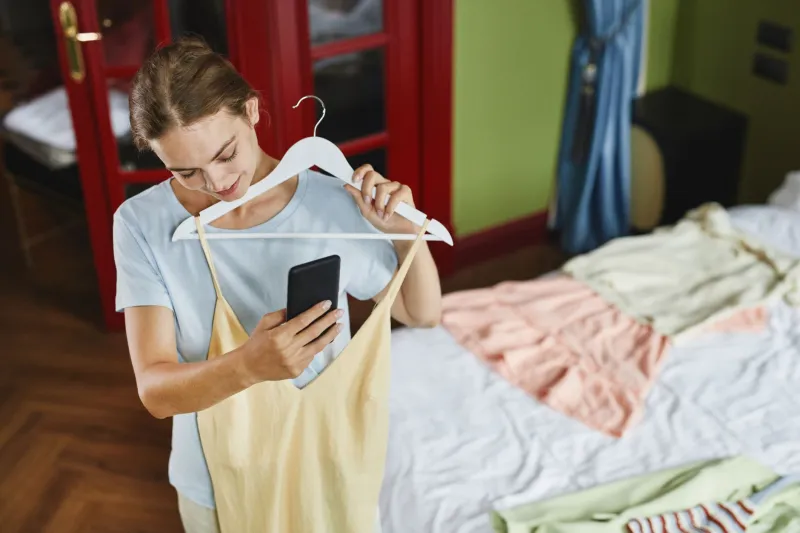
You're going to the grocery store. It's 2pm on a Wednesday. The stakes are, objectively, zero. And yet — you changed your outfit twice, spritzed something that cost $80, and are now standing in the produce aisle looking like you're about to give a TED Talk on heirloom tomatoes.
Congratulations. You've been bitten by the bug. The invisible interview is in session, and you didn't even know you applied.
The Phantom Impression
There's a specific kind of person who gets dressed every morning as if a panel of judges is hiding just around the corner, clipboards in hand, ready to evaluate their Put-Together-ness on a scale of one to LinkedIn profile photo. The terrifying thing? That person is probably you. And me. And honestly, most of us operating in the wild in 2024.
Psychologists have a term for the tendency to imagine an audience watching our behavior: the imaginary audience effect. It's most commonly associated with teenagers, but fashion culture has quietly extended the lease on it well into adulthood. Somewhere between our first real job and our third apartment, we started dressing not for where we were going, but for some idealized version of ourselves who might show up at any moment and need to make a flawless first impression.
The result is a wardrobe permanently set to "new girl at the office" — polished, slightly stiff, and deeply committed to the idea that today might be the day everything changes.
The Office Outfit That Escaped the Office
Blame it on remote work, or the slow collapse of dress codes, or the fact that "business casual" was always a meaningless phrase designed by people who hate fun. Whatever the cause, the professional aesthetic has bled so thoroughly into everyday life that it's now impossible to tell who's heading to a quarterly review and who's just picking up dry cleaning.
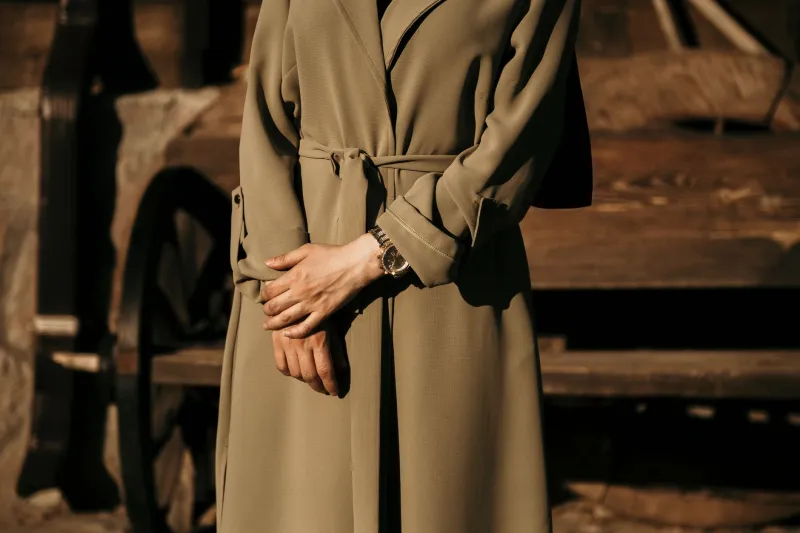
The blazer — oh, the blazer — has become the Swiss Army knife of performative put-togetherness. It says I have places to be when the only place you have to be is your couch. It whispers I am a person who has things handled while your email inbox quietly disagrees. It is, above all else, the garment of someone who is technically ready for anything, even if "anything" is a three-block walk to a coffee shop where no one knows your name.
And we are obsessed with it.
Dressing for a Version of Yourself That Might Show Up
Here's where it gets genuinely interesting, psychologically speaking. A lot of the "trying too hard in casual settings" phenomenon isn't actually about impressing other people. It's about impressing a future self — a hypothetical upgraded version of you who has their act together, lands the cool opportunity, runs into the right person at the right moment, and absolutely cannot be caught wearing the hoodie they've had since 2017.
This is aspirational dressing in its purest, most delusional form. You're not dressing for Tuesday. You're dressing for the Tuesday where your life pivots in a cinematic direction and you need to already look the part.
The fantasy is oddly specific: you'll be somewhere low-key — a bookstore, a coffee shop, a farmer's market — and someone important will notice you, not just for your charisma and your devastating taste in novels, but because you look exactly like someone worth noticing. The outfit is load-bearing in this scenario. The outfit is doing the heavy lifting of your entire future.
No pressure, trousers.
The Low-Stakes Arms Race
What makes this whole thing truly spectacular is how it compounds in social situations. One person shows up to a casual brunch looking suspiciously polished. The next person, feeling underdressed, escalates slightly for the following brunch. Within three months, everyone is arriving at a backyard barbecue in outfits that suggest they have a driver waiting outside.
This is the low-stakes arms race — a sartorial escalation that nobody agreed to but everyone is participating in. You're not overdressed, you're appropriately dressed for the level of effort everyone else secretly brought. It's an unspoken social contract written entirely in elevated basics and statement accessories.
The worst part? It works. People do notice. People do think you have it together. The imaginary audience turns out to be real, just scattered and mostly distracted by their own phones.
When 'Trying' Becomes the Baseline
At some point — and this is the part nobody warns you about — the effort stops feeling like effort. The blazer stops being a choice and starts being a reflex. The groomed, composed, ready-for-anything version of you becomes the only version you know how to present, even when the occasion actively does not require it.
You've gone to a backyard hangout looking like a senior associate. You've run errands in an outfit that could close a deal. You've sat on your own couch in clothes that technically belong at a rooftop event, because changing into something comfortable felt like giving up on something you can't quite name.
The invisible interview never ends because you never let it. You are simultaneously the candidate and the hiring committee, perpetually in round two, perpetually performing competence for a job you already have — which is, to be clear, just your regular life.
A Gentle Suggestion (Not That You Asked)
None of this is necessarily a problem, to be clear. Dressing well feels good. Looking intentional can shift your confidence in real, measurable ways. The "enclothed cognition" research — yes, that's a real thing — suggests that what you wear actually influences how you think and perform. So maybe the blazer is doing something.
But it's worth occasionally asking: who exactly am I dressed for today? If the answer is "a vague sense of ambient possibility and the faint hope that my life is about to make a left turn into something better" — that's fine. Genuinely fine. Just know that you're in very good company.
The imaginary audience is packed. The invisible interview is standing room only.
You might as well look great.