The Most Discreet Outfit in the Room Cost More Than Your Rent: A Meditation on Quiet Luxury's Very Loud Problem
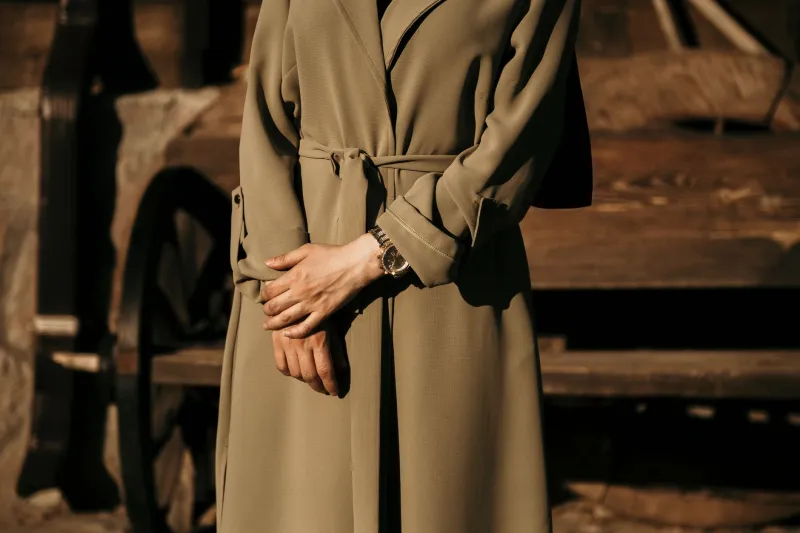
Imagine a woman walking into a room. She's wearing a cream cashmere turtleneck, perfectly cut camel trousers, and loafers so understated they could only be Loro Piana. No logo. No flash. No discernible effort. She looks, to the untrained eye, like someone who simply threw on whatever was nearby.
To the trained eye — which, thanks to two solid years of TikTok content, is now basically everyone's eye — she looks like she's wearing approximately $6,000 worth of deliberate nonchalance.
This is quiet luxury. The trend that told you to whisper, then made sure everyone heard it.
The Philosophy That Ate Itself
Quiet luxury, for the uninitiated, is the aesthetic movement that prizes expensive neutrals, impeccable tailoring, and the conspicuous absence of conspicuous branding. Its spiritual ancestors are old-money families who wore the same Brooks Brothers blazer for thirty years because they didn't need to announce anything. Its current practitioners are millennials and Gen Z consumers who have watched enough Succession to know that Tom Wambsgans had the worst outfits in the room, and they are not going to be Tom Wambsgans.
The guiding principle is simple: real wealth doesn't advertise itself. The logoless, the understated, the quietly superior — that's the real flex. A $4,000 Brunello Cucinelli sweater doesn't need to say its own name. You either know, or you don't. And if you don't know, that's fine. That's actually the point.
Except — and here's where it collapses into beautiful, expensive irony — everyone knows now. Completely and entirely everyone.
When Subtlety Goes Viral
Sometime around 2022, quiet luxury escaped the actual wealthy and landed on social media, which is the environment most hostile to subtlety ever created by human beings. TikTok got hold of it. YouTube followed. Pinterest made approximately forty thousand mood boards. And suddenly, the aesthetic built on not being seen became one of the most-searched, most-discussed, most-analyzed fashion movements in recent memory.
Content creators began posting guides to "getting the quiet luxury look" for under $200. Zara and H&M dropped cream-and-camel collections so fast the ink on the trend reports was barely dry. "Stealth wealth" became a legitimate SEO keyword. The Wall Street Journal wrote about it. Your aunt mentioned it at Thanksgiving.
The quiet, it turns out, was extremely loud.
The delicious paradox at the center of all this: the moment you have to explain that you're not trying to show off, you are, definitionally, showing off. The knowledge that a plain beige sweater costs $1,800 has to exist in the room for the flex to function. Quiet luxury requires an audience that is fluent in quiet luxury. It needs the very attention it claims to reject.
The Invisible Label That Everyone Can Now Read
Part of what made old-money dressing genuinely discreet was that most people couldn't identify the brands. A Hermès belt or a vintage Chanel jacket carried meaning only within specific social circles. Outside those circles, it was just a nice coat. The knowledge was gatekept by access.
The internet demolished the gate. Now, a teenager in Tulsa can identify Loro Piana by the texture of the cashmere in a TikTok thumbnail. A 24-year-old in Cincinnati can tell the difference between a $90 Amazon camel coat and an actual Max Mara one because someone made a forty-five-second video about it. The "invisible" labels have been catalogued, cross-referenced, and explained to millions of people who now function as walking brand-identification software.
The result is that the people wearing quiet luxury are, in many social contexts, more legible as wealthy than someone wearing a logo. The logo at least maintains some ambiguity — is it real? Is it a dupe? Quiet luxury, properly executed, has no dupe problem. The quality announces itself to anyone who's been paying attention. And everyone has been paying attention.
The Cost of Looking Like You Don't Care
Let's do some numbers, because the numbers are genuinely spectacular.
A "simple" quiet luxury outfit — turtleneck, trousers, loafers, a good bag — assembled from the brands most associated with the aesthetic will comfortably run you between $5,000 and $15,000, depending on how deep you're going. The Loro Piana cashmere alone is a four-figure commitment. The Bottega Veneta bag, if you're going that route, starts at around $2,500. The loafers — Gucci if you're being relatively accessible, something more obscure if you're really committing — another $600 to $1,200.
This is the price of looking like you didn't think about money.
And it gets better: the maintenance costs of quiet luxury are their own category of expense. Cashmere needs to be properly stored, professionally cleaned, and treated with a reverence that most people reserve for medical equipment. The neutral palette that makes everything look effortless also makes everything show every coffee drip, every pen mark, every moment of being a regular human in a world that contains food.
Looking like you don't try requires an enormous amount of trying. The aesthetic is, at its core, one of the most high-maintenance wardrobes ever conceived, disguised as its own opposite.
The Democratic Paradox
What's genuinely interesting — and slightly maddening — about quiet luxury's cultural moment is that it created a two-tier trend simultaneously. At the top, actual expensive pieces doing the thing they were designed to do. At the bottom, a massive market for "quiet luxury-inspired" pieces from accessible retailers that capture the visual of the trend without the price point.
Which means you now have people in $35 Uniqlo turtlenecks and people in $1,800 Brunello Cucinelli turtlenecks standing in the same room, both ostensibly participating in the same aesthetic, both looking approximately similar to anyone who isn't specifically looking for the difference.
The old-money crowd, presumably, finds this horrifying. The internet, predictably, finds it hilarious. The fast fashion brands, quietly, find it extremely profitable.
In Defense of Just Being Loud About It
Here's a genuinely radical proposition: if you're going to spend the equivalent of a semester's tuition on your wardrobe, maybe just... let it have a logo. At least then the transaction is honest. At least then the flex acknowledges itself as a flex rather than performing this elaborate theater of reluctant elegance.
Quiet luxury, at its most pretentious, asks you to spend more money than most people's monthly rent on an outfit, and then also asks you to act like the money doesn't exist. It's financial discretion cosplaying as aesthetic philosophy. It's a very expensive way of saying nothing while saying everything.
The quietest thing in the room, it turns out, is the price tag.
Everything else is screaming.