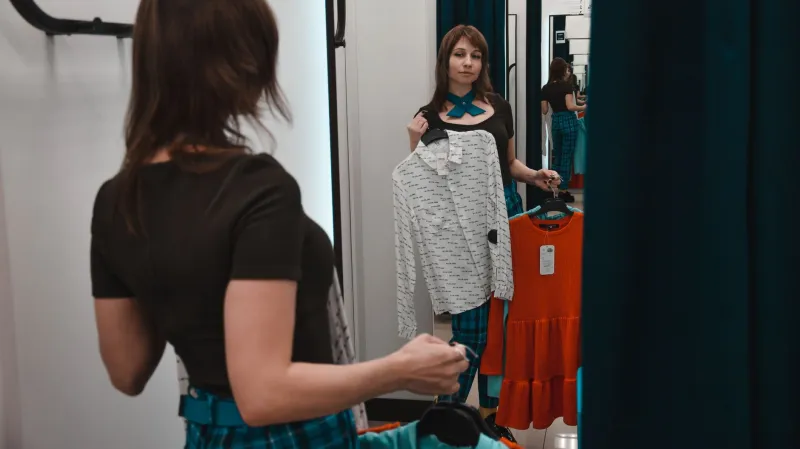
From 'I Like This Jacket' to 'I Am a Dark Coastal Grandmother': How Pinterest Turned Getting Dressed Into a Graduate Thesis
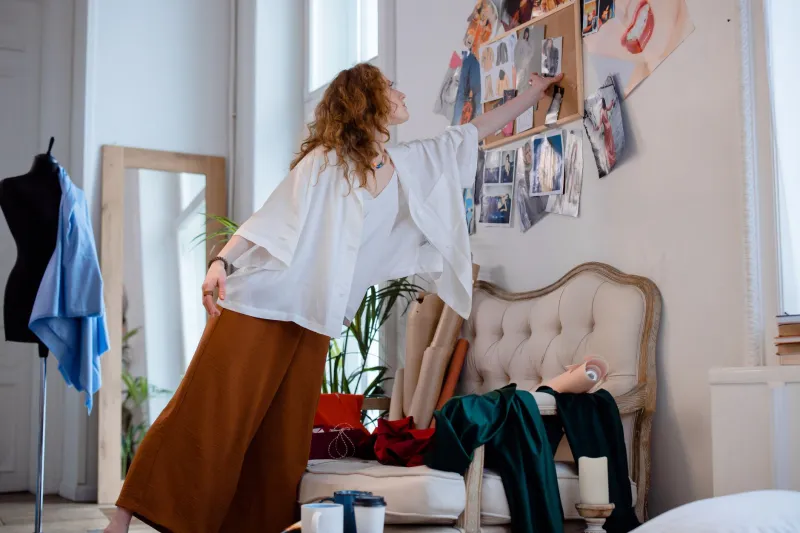
From 'I Like This Jacket' to 'I Am a Dark Coastal Grandmother': How Pinterest Turned Getting Dressed Into a Graduate Thesis
Once upon a time — and we are talking maybe fifteen years ago, which is both recent and ancient in internet years — figuring out your personal style was a low-stakes, low-infrastructure process. You bought things. You wore things. Some of them worked. Some of them didn't. Over time, a picture emerged. You adjusted. You were done, more or less.
It was imprecise. It was occasionally expensive in the way that trial and error tends to be. But it was also, crucially, finite. At some point you had enough information about yourself to get dressed in the morning without conducting a research project first.
That era is over.
In 2024, finding your personal style is a multi-week, multi-platform undertaking that involves Pinterest boards, TikTok rabbit holes, aesthetic taxonomy spreadsheets (yes, these exist), and a working knowledge of approximately forty-seven micro-aesthetics with names like 'dark academia,' 'quiet luxury,' 'coastal grandmother,' 'cottagecore,' 'office siren,' 'vanilla girl,' 'tomato girl summer,' and — we are not making this up — 'dark feminine energy with Regencycore undertones.'
You are no longer a person who likes certain clothes. You are a vibe. You are a mood board. You are a fully articulated aesthetic thesis with citations.
And you still don't know what to wear.
The Pipeline, Explained
The Aesthetic Pipeline typically begins with something innocent. A photo you save. A look you see on someone in a coffee shop. A jacket that makes you feel something. This is the seed — a single, uncomplicated moment of 'I like that.'
What happens next is where things get complicated.
You open Pinterest to find more things like the jacket. Pinterest, which has been waiting patiently for exactly this moment, serves you seventeen boards, four aesthetic categories, and a suggested search term you did not type but which the algorithm correctly intuited from the jacket alone. You follow the thread. You save more images. The images start to cluster around a feeling — a specific quality of light, a color palette, a general vibe that feels like it belongs to a season or a lifestyle or a version of yourself you haven't fully inhabited yet.
Two hours later, you have saved 340 images and begun to suspect that you are, aesthetically speaking, 'old money with a creative edge and a preference for natural fibers.'
You are now in the pipeline.
The Naming of the Aesthetic
Here is where the internet does something genuinely strange: it gives your vague collection of visual preferences a name. And the name changes everything.
Before the name, you just liked certain things. After the name, you have an identity. You are not someone who gravitates toward neutral tones and loose silhouettes — you are a quiet luxury girlie. You are not someone who likes oversized cardigans and pastoral prints — you are cottagecore. The name transforms a personal preference into a community, a shorthand, a searchable category with its own hashtag and its own influencer ecosystem and its own recommended shopping list.
This is, on one level, genuinely useful. Finding a name for the thing you're drawn to does make it easier to search for more of it, to communicate your preferences to others, to avoid buying things that don't fit the vision.
On another level, it is a trap of spectacular proportions.
Because once you have a name, you have a brand, and brands have rules. Suddenly the jacket — the original jacket, the innocent starting point of this entire journey — might not be quite right. It is close, but it is not perfectly aligned with the aesthetic you have now defined for yourself with considerable precision. You need the right jacket. The one that would appear on a Pinterest board titled 'dark coastal grandmother energy, autumn, pre-Raphaelite undertones.' The original jacket, which you liked twenty minutes ago, has become a compromise.
The Board That Ate Your Afternoon
A quick note on Pinterest boards, because they deserve their own examination.
The average person in the Aesthetic Pipeline does not have one Pinterest board. They have several. The boards have names. The names are very specific. Examples we have personally witnessed include: 'Autumn Me (Aspirational),' 'Quiet Luxury But Make It Accessible,' 'The Version of Myself That Lives in Copenhagen,' 'Clothes for When I Figure Out Who I Am,' and, our personal favorite, 'Business Casual If Business Casual Were Interesting.'
Each board contains between forty and four hundred saved images. The images are beautiful. They are also largely incompatible with each other, because you have been building multiple boards simultaneously and the aesthetics have started to bleed together. Your 'old money minimalist' board and your 'dark romantic academia' board are now having a conversation that is philosophically unresolvable.
You are, aesthetically, a multitude. This is both liberating and a significant obstacle to actually getting dressed.
The Taxonomy Problem
The deeper you go into the Aesthetic Pipeline, the more granular the categories become, and the more granular the categories become, the more specific — and therefore more elusive — your 'true' aesthetic feels.
In 2019, you might have said 'I like a classic, minimal look.' Clean and simple. Done.
In 2024, that same person might describe themselves as 'quiet luxury adjacent, with Scandinavian minimalist influences, a preference for the warmer end of the neutral palette, some old money sensibility but not the preppy elements, more Italian countryside than Connecticut coast, and a growing interest in what I'd call elevated basics but not in the way that term has been overused.'
This is a more accurate description. It is also seventeen times harder to shop for, because the category is so specific that almost nothing fully qualifies. You are looking for clothes that exist at the intersection of five different micro-aesthetics, all of which have slightly different visual vocabularies, and the overlap is approximately three items, none of which are in your size.
Does Any of This Make People Dress Better?
This is the question worth asking, because all of this research and categorization is theoretically in service of a practical goal: wearing clothes you actually like.
The honest answer is: sometimes yes, more often no, and the reasons are interesting.
The yes: people who go through the Aesthetic Pipeline do often develop a clearer sense of what they're drawn to. The process of looking at hundreds of images and identifying patterns in what you save is, functionally, a form of self-knowledge. You learn things about your preferences — color, proportion, texture, mood — that you might not have articulated otherwise. That is genuinely useful.
The no: the pipeline is also a very effective mechanism for generating desire without satisfying it. Every new aesthetic you discover is a new gap between your current wardrobe and your ideal one. The more boards you build, the more the distance grows. You are always one capsule wardrobe away from finally having it figured out, but the capsule wardrobe keeps evolving because the aesthetic keeps refining, and the refinement is, not coincidentally, excellent for the business of selling clothes.
The pipeline does not end with a wardrobe. It ends with a new board.
The Jacket, Revisited
You still like the jacket. You liked it before any of this started. It fits well, it goes with things you own, and when you wear it you feel like yourself — which is, when you strip away forty-seven Pinterest boards and three weeks of micro-aesthetic research, the only thing personal style was ever supposed to do.
The jacket does not have a name. It does not belong to a defined aesthetic category. It is just a jacket that you like, which puts it in a long and underrated tradition of clothes that work simply because they work.
Buy the jacket. Close the tabs. You already knew.